Night Vision and Thermal Imaging for Tactical Operations: A Complete Guide
In modern tactical operations, night vision and thermal imaging are no longer optional — they are mission-critical. Whether conducting a nighttime perimeter sweep, tracking hostile movement through dense terrain, or executing a precision raid in zero-light conditions, the force that owns the night owns the outcome. This guide is written for defense procurement professionals, unit commanders, and security decision-makers who need to understand what the technology actually delivers — and how to choose the right system.
Why Night Vision Technology Is a Force Multiplier
The human eye is catastrophically limited in low-light conditions. An adversary who exploits darkness gains an asymmetric advantage — unless your forces are equipped to counter it. Night vision and thermal imaging close that gap entirely, transforming darkness from a threat into a tactical asset.
Modern image intensification (I²) devices amplify ambient light — moonlight, starlight, even residual urban glow — to produce a clear, usable image. Thermal imagers work differently: they detect the infrared radiation (heat) emitted by all objects, making them completely independent of light conditions. Together, these technologies provide comprehensive situational awareness across all environments and all hours.
Image Intensification vs. Thermal Imaging: Key Differences
Understanding the difference is essential for correct procurement decisions.
Image Intensification (Night Vision)
- Amplifies available light — requires at least minimal ambient illumination
- Produces detailed visual imagery — faces, markings, terrain features are recognizable
- Ideal for urban operations, CQB, vehicle navigation
- Generations: Gen 1, Gen 2, Gen 3 (military standard), and Gen 3 Autogated
- Typical range: 50–300 meters depending on conditions and device generation
Thermal Imaging
- Detects heat signatures — works in complete darkness, smoke, and light fog
- Cannot be fooled by camouflage that matches visual patterns — body heat always registers
- Ideal for perimeter surveillance, target detection, search and rescue
- Resolution categories: 320×240, 640×480, 1280×1024 (long-range surveillance)
- Typical detection range: 500m–3km depending on optic and target size
The most capable operators use fused systems — devices that combine both technologies in a single optic, giving the user the ability to switch modes or view a blended image depending on mission requirements.
Meprolight: Israel’s Standard for Tactical Optics
ARMA GIDEON partners with Meprolight, an Israeli defense optics manufacturer with decades of operational history. Meprolight products are in active service with the Israel Defense Forces, NATO allies, and security agencies across four continents. Their systems are designed to the same requirements that drive IDF procurement — extreme durability, minimal maintenance, and performance under combat stress.
Meprolight’s tactical optic range covers:
- Weapon-mounted night vision sights — zero-parallax aiming in darkness
- Clip-on thermal devices — attach to existing day scopes without re-zeroing
- Head-mounted NVGs — hands-free observation for infantry and vehicle crews
- Long-range thermal surveillance systems — fixed or vehicle-mounted
Choosing the Right System: Procurement Criteria
Defense procurement teams must evaluate five factors when specifying night vision and thermal systems:
1. Mission Profile
Perimeter surveillance requires long-range thermal. CQB operations require lightweight, head-mounted NVGs. Sniper support requires high-resolution clip-on thermals. Specify the primary mission before specifying the device.
2. Generation and Sensitivity
For professional security forces, Gen 3 image intensification tubes are the baseline standard. For thermal, detector sensitivity (NETD — Noise Equivalent Temperature Difference) below 40mK ensures target discrimination at operational ranges.
3. Durability Standards
Tactical optics must meet MIL-STD-810 for shock, vibration, temperature, and water resistance. Systems used in maritime environments additionally require salt-fog certification.
4. Battery Life and Logistics
Operational endurance matters as much as optical performance. Systems that run on standard AA or CR123 batteries simplify logistics. Target minimum: 20+ hours continuous operation.
5. Training and Integration
Even the best optic is useless without trained operators. Procurement packages should include operator training, maintenance certification, and integration guidance for existing weapon platforms and vehicles.
Night Vision in Combined Arms Operations
The operational impact of night vision extends beyond individual infantry. Modern combined arms doctrine relies on synchronized, multi-domain night capability:
- Vehicle crews use thermal driver viewers and commander sights to operate at full speed in blackout conditions
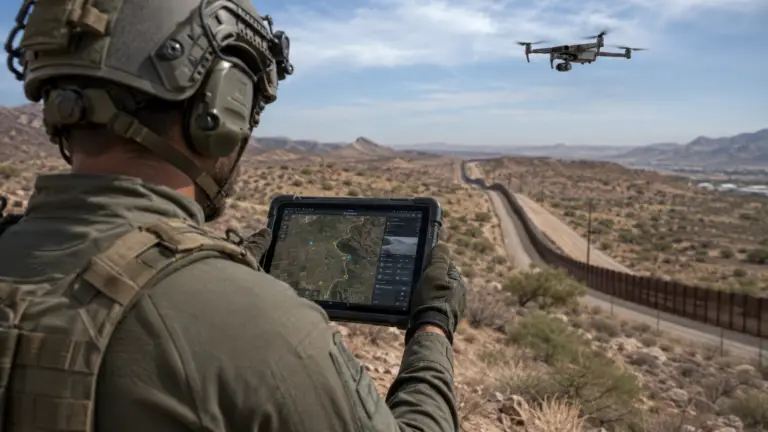
- Aviation assets — including tactical drones — integrate thermal sensors for reconnaissance and targeting
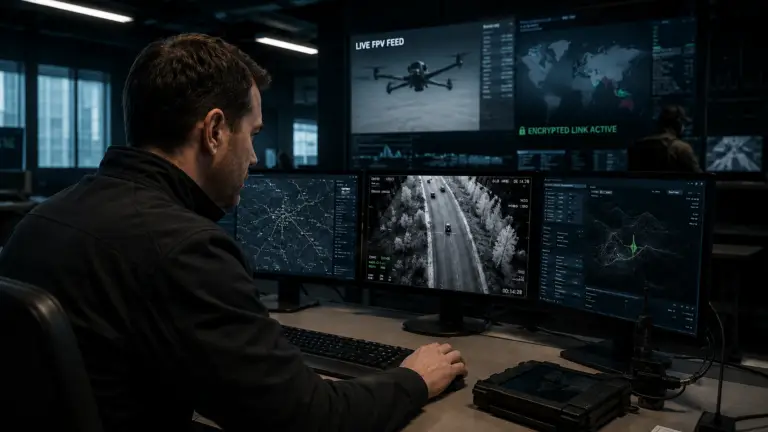
- Command elements use networked thermal feeds from UAVs to build a real-time common operating picture
- Sniper teams use thermal spotters to detect targets concealed behind vegetation or urban cover
ARMA GIDEON supplies integrated solutions that connect individual optics with broader C4ISR networks, enabling commanders to aggregate thermal and NV feeds from multiple sources into a unified picture.
Maintenance, Calibration, and Lifecycle Management
Night vision and thermal devices are precision instruments that require structured maintenance programs. Tube degradation in I² devices is measurable and manageable — scheduled performance checks at the unit level prevent operational failures. Thermal detectors require periodic non-uniformity correction (NUC) to maintain image quality.
ARMA GIDEON provides full lifecycle support packages including:
- Initial operator and maintenance training
- Spare parts supply chain management
- Calibration and repair center access
- Upgrade pathways as technology advances
Regulatory and Export Considerations
Night vision equipment — particularly Gen 3 image intensification devices — falls under export control regimes in most manufacturing countries. Procurement teams must ensure that acquisition channels are properly licensed and that end-user certificates are in place. ARMA GIDEON manages all necessary export documentation and compliance as part of its procurement service, ensuring legal and timely delivery to authorized government and security force clients.
The Tactical Bottom Line
Night vision and thermal imaging are not luxury items — they are baseline equipment for any professional security force operating in the 21st century. The technology gap between equipped and unequipped forces in low-light conditions is decisive. Forces that train, equip, and operate with night capability gain a compounding advantage: they can choose when to fight, on their terms, under conditions that neutralize the adversary.
For procurement professionals evaluating night vision and thermal imaging systems, the questions are not whether to acquire — but which systems, in what configuration, and through which supply chain.
Next Steps
ARMA GIDEON provides end-to-end support for defense and security procurement — from capability assessment through system selection, export compliance, training, and lifecycle management. Our team works directly with qualified government entities, security agencies, and defense contractors.
Contact ARMA GIDEON to discuss your unit’s night vision and thermal imaging requirements. We provide confidential, no-obligation consultations for qualified procurement teams.