Military Simulation and VR Training: The Future of Force Readiness
Military simulation and VR training have fundamentally changed how armed forces and security agencies prepare their personnel for combat and crisis scenarios. Where traditional live-fire training is expensive, logistically complex, and inherently limited in scenario variety, simulation-based training delivers repeatable, scalable, and measurable readiness at a fraction of the cost. This guide examines the technology, the doctrine, and the procurement decisions that determine whether a simulation program succeeds or fails.
Why Simulation Has Become a Core Readiness Tool
Modern operational environments are complex, unpredictable, and multi-domain. A soldier or operator today may face a conventional firefight, a hostage rescue, a crowd control situation, and a cyber-physical attack in the same deployment cycle. No live-fire range can replicate this breadth. Simulation can.
The argument for simulation investment is straightforward:
- Cost: A simulated engagement costs a fraction of live ammunition, fuel, and range time
- Safety: High-risk scenarios — building breaches, vehicle ambushes, CBRN events — can be trained without risk of injury
- Repetition: Trainees can run the same scenario hundreds of times until the correct response is instinctive
- Scenario variety: Urban combat, jungle patrol, maritime interdiction, cyber-physical attacks — all accessible in one system
- After-action review: Full recording and playback of every training session enables precise performance analysis
Types of Military Simulation Systems
Virtual Reality (VR) Immersive Training
Head-mounted VR systems place the trainee inside a fully rendered three-dimensional environment. Modern military VR platforms offer photorealistic terrain recreation, accurate ballistic modeling, and multi-player networked scenarios. Trainees can conduct room-clearance, convoy operations, or casualty evacuation in environments that replicate the actual operational theater.
Constructive Simulation
Used primarily for command-level training, constructive simulation models entire battles with computer-generated forces. Commanders and staff officers exercise decision-making, coordination, and logistics under simulated operational pressure — without moving a single real vehicle.
Live-Virtual-Constructive (LVC) Integration
The most advanced training architecture combines real personnel, virtual avatars, and computer-generated forces in a single networked exercise. A platoon of live soldiers in the field interacts with simulated air assets, enemy forces, and civilian elements rendered in the virtual domain. This is the gold standard for combined arms training.
Weapons Simulation Systems
Simulated weapons — replicas of actual service firearms, crew-served weapons, and vehicle weapon systems — provide haptic feedback, accurate recoil modeling, and real trigger mechanics. Trainees develop muscle memory with the actual weapon interface while the virtual environment provides the threat and target.
ARMA GIDEON’s Simulation Capability
ARMA GIDEON delivers turnkey simulation and VR training solutions for military units, law enforcement agencies, and security forces. Our systems are built around operational requirements — not commercial gaming technology. Every simulation environment is developed in consultation with experienced operators to ensure tactical fidelity.
Our simulation portfolio covers:
- CQB and urban warfare — room clearance, hostage scenarios, IED identification
- Counter-terrorism operations — threat recognition, use-of-force decision training
- Vehicle and convoy operations — ambush response, checkpoint procedures
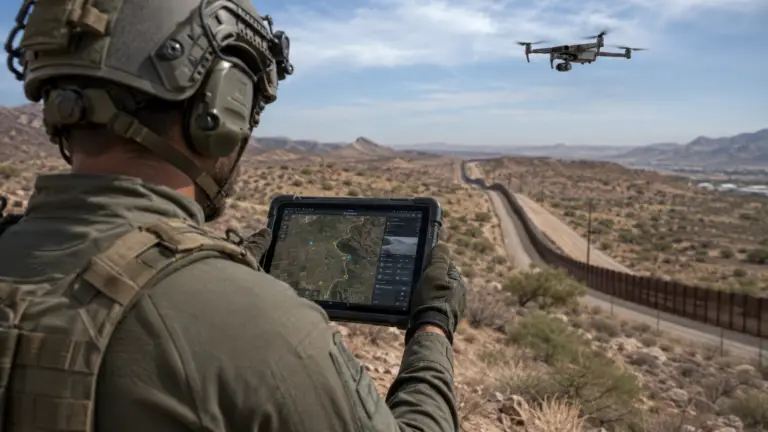
- Drone integration training — operating UAV assets in combined arms scenarios
- Maritime security scenarios — vessel boarding, harbor defense
- Command post exercises — staff officer training, logistics, communications under pressure
Measuring Training Effectiveness
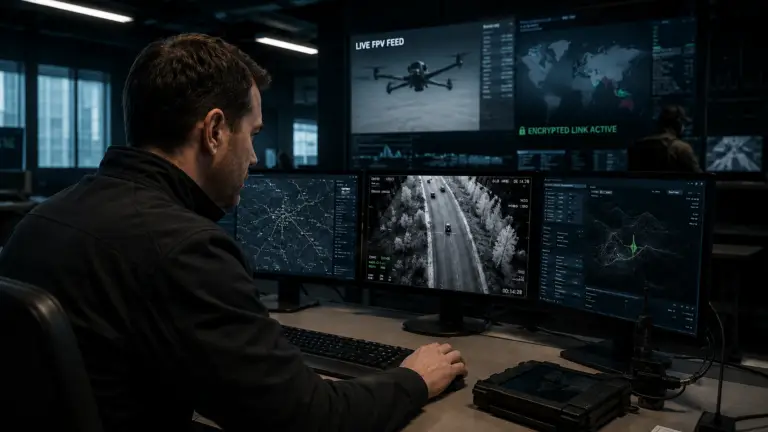
One of simulation’s most underutilized advantages is its measurability. Every training session generates data: reaction times, decision points, accuracy, movement patterns, communication discipline. ARMA GIDEON’s platforms include integrated performance analytics dashboards that allow training officers to:
- Track individual trainee progress over time
- Identify unit-level weaknesses in specific scenario types
- Benchmark performance against standardized criteria
- Generate automated after-action reports for debrief
This data-driven approach to training management transforms readiness from a subjective assessment into a measurable, manageable metric.
Integration with Live Training Cycles
Simulation does not replace live training — it enhances it. The most effective training programs use simulation to build foundational skills and scenario familiarity before committing resources to live exercises. Trainees who have run a scenario 50 times in simulation perform measurably better in their first live execution.
ARMA GIDEON designs simulation programs that integrate with existing training cycles, ensuring that simulation hours complement rather than duplicate live training investment.
Infrastructure and Deployment Options
Simulation systems can be deployed in multiple configurations depending on budget, space, and operational requirements:
Fixed Installation
Dedicated simulation centers with multiple networked stations, large-format displays, and full motion platforms. Suitable for training bases and national training centers.
Mobile Units
Containerized simulation systems deployable to forward operating bases or remote locations. Provides in-theater training capability without requiring trainees to return to a main base.
Classroom Systems
Compact, rapid-setup systems for small-unit training. Can be installed in standard classroom space and operational within hours.
Return on Investment in Simulation
Defense ministries and security agencies that have implemented structured simulation programs consistently report:
- 30–60% reduction in live ammunition expenditure
- Measurable improvement in first-pass success rates on live evaluations
- Significant reduction in training-related accidents and incidents
- Accelerated qualification timelines for new personnel
The upfront investment in simulation infrastructure typically achieves ROI within two to three training cycles when measured against live training costs.
The Readiness Imperative
For any organization responsible for deploying trained, effective personnel into complex operational environments, simulation is no longer optional. The forces, agencies, and security organizations that invest in structured simulation programs today will field more capable, more confident, and more resilient personnel than those that continue to rely on traditional training methods alone.
The question is not whether to invest in simulation — it is which system, which scenarios, and which implementation model best fits your organization’s operational requirements and budget.
Talk to Our Team
ARMA GIDEON’s simulation specialists work with qualified military and security clients to design, implement, and support training programs that deliver measurable readiness gains. We provide capability assessments, system demonstrations, and full implementation support.
Contact ARMA GIDEON to arrange a confidential consultation and system demonstration for your organization.