In contemporary security environments, ballistic protection has become a fundamental requirement for military, law-enforcement, and private security forces operating in high-risk theaters. Whether deployed in asymmetric warfare zones, conducting CQB operations, securing critical infrastructure, or supporting special missions abroad, personnel survivability depends on the reliability, performance, and integration of protective systems.
For companies and government agencies responsible for equipping operational forces, the challenges are clear:
● Selecting gear that meets strict NIJ standards
● Ensuring compatibility with mission profiles
● Maintaining a balance between protection level, mobility, and operational endurance
● Guaranteeing supply-chain reliability and lifecycle maintenance
This article provides a comprehensive, B2B-oriented explanation of ballistic protection products—Ballistic Vests (NIJ Level IIIA–IV), Ballistic Plates (Standalone & ICW), Bulletproof Helmets & Shields, and integrated tactical protective solutions—aligned with the standard of companies like ARMA GIDEON, a global provider of defense, security, and tactical technology.
1. The Strategic Importance of Ballistic Protection in Modern Warfare
The evolution of global threats has pushed the defense ecosystem into a new paradigm, where ballistic protection is more than gear—it’s a strategic capability. In theaters where adversaries deploy high-velocity small arms, armor-piercing ammunition, improvised weapons, and increasingly sophisticated urban ambush tactics, the survivability of the operator becomes a central element of mission planning.
Modern ballistic systems must therefore:
● Withstand multi-hit impacts from a wide spectrum of ballistic threats
● Maintain operational mobility in confined or complex terrain
● Provide modular configurations tailored to mission sets (CQB, reconnaissance, counter-terrorism, border patrol, maritime interdiction)
● Integrate additional technological components—comms, sensors, tactical pouches, hydration, power distribution
● Remain lightweight without compromising structural integrity
For defense clients making procurement decisions, ballistic protection is not a standalone item but a force-multiplying asset that directly influences casualty prevention, operational continuity, and overall mission success.
2. Understanding Ballistic Standards: The NIJ Framework
The National Institute of Justice (NIJ) remains the benchmark for ballistic protection performance evaluation. For B2B defense procurement, understanding NIJ standards ensures selection of compliant, certified products capable of withstanding mission-relevant threats.
NIJ Level IIIA
● Designed to protect against common handgun calibers:
○ .357 SIG
○ .44 Magnum
● Widely used for concealed vests, VIP protection, law enforcement patrol units, and close protection details.
NIJ Level III
● Stops 7.62×51mm NATO (M80) ball rounds.
● Suitable for military infantry, border forces, rapid-intervention teams, and counter-terror units.
NIJ Level IV
● Highest level of ballistic protection.
● Stops armor-piercing rounds, including .30-06 AP (M2 AP).
● Typically used in:
○ High-intensity combat zones
○ Special operations
○ Urban warfare with elevated ballistic threats
○ Anti-terror missions in fortified environments
For institutions seeking premium survivability solutions, NIJ Level IV ballistic plates and vests are considered the operational gold standard.
3. Ballistic Vests (NIJ Level IIIA – IV)
Ballistic vests form the backbone of modern protective systems. They are engineered to balance three critical parameters:
- Protection Level
- Weight Distribution
- Mobility & Comfort
NIJ Level IIIA Vests
Constructed primarily from advanced soft armor materials such as Kevlar, Twaron, and UHMWPE fibers, these vests offer optimal mobility and discreet wearability. Defense clients deploy Level IIIA vests for:
● Police units in urban policing
● Diplomatic protection teams
● Air marshals
● Special operations personnel utilizing layered protection systems
NIJ Level III–IV Tactical Vests
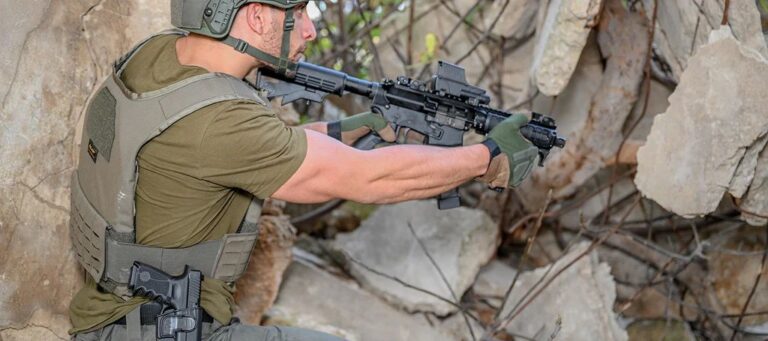
Heavier and more robust, these vests integrate hard armor plates in either front-back or full-360° protection setups. Tactical vests for ARMA GIDEON-type clients include features such as:
● MOLLE/PALS compatibility
● Reinforced drag handles
● Quick-release mechanisms
● Adjustable cummerbunds
● Multi-mission pouch configurations
● Integration options for comms and hydration systems
Their value lies in modularity—allowing forces to adapt their protection levels according to mission tempo and threat assessment.
4. Ballistic Plates (Standalone & ICW)
Ballistic plates are available in two primary configurations: Standalone (SA) and In-Conjunction-With (ICW). Selecting between them depends on operational doctrine and equipment architecture.
4.1 Standalone Plates (SA)
Standalone plates are designed to stop ballistic threats without requiring a soft armor backer. They provide immediate, high-threat protection in a single unit.
Key characteristics:
● Used primarily in NIJ Level III and IV
● Often constructed from:
○ Ceramic composite (Alumina, Silicon Carbide, Boron Carbide)
○ UHMWPE
○ Hybrid materials
● Multi-hit capabilities against rifle fire
Ideal for rapid- deployment forces, special operations, and infantry units needing maximum independence from layered armor systems.
4.2 ICW Plates (In-Conjunction-With)
ICW plates require a soft armor vest to achieve full NIJ performance rating. When combined properly, ICW systems offer:
● Reduced overall weight
● Better flexibility
● Enhanced stopping power for specific rifle threats
These plates are widely used in urban warfare, where combining mobility with protection significantly increases operator survival and performance.
5. Bulletproof Helmets & Shields
5.1 Ballistic Helmets
Modern ballistic helmets are critical components of personnel protection. Operators rely on them not only for ballistic stopping power but also as platforms for tactical hardware integration.
Typical characteristics of NIJ Level IIIA helmets include:
● Protection against 9mm, .357 SIG, and .44 Magnum
● Compatibility with NVGs, night-vision monoculars, and thermal devices
● Mounting rails for communications systems
● Lightweight composite construction (Aramid, UHMWPE)
● Options:
○ High-Cut (for special forces, communications-heavy missions)
○ Mid-Cut
○ Full-Cut (for maximum protection)
5.2 Ballistic Shields
Ballistic shields serve tactical entry teams, counter-terror units, and high-risk law-enforcement groups. Shields may be NIJ Level IIIA, III, or IV depending on mission parameters.
Key capabilities include:
● Multi-hit resistance
● Lightweight composite cores
● Transparent armor viewport options
● Integrated lighting systems
● Ergonomic handles for prolonged engagements
Ballistic shields significantly enhance survivability during active-shooter responses, breaching operations, and internal security missions.
6. Integrated Tactical Gear & Mission-Adapted Protection
Ballistic protection does not operate in isolation. Modern operators require gear systems that integrate seamlessly with:
● Weapon platforms
● Ammunition loadouts
● Navigation and tactical computing devices
● Communications suites
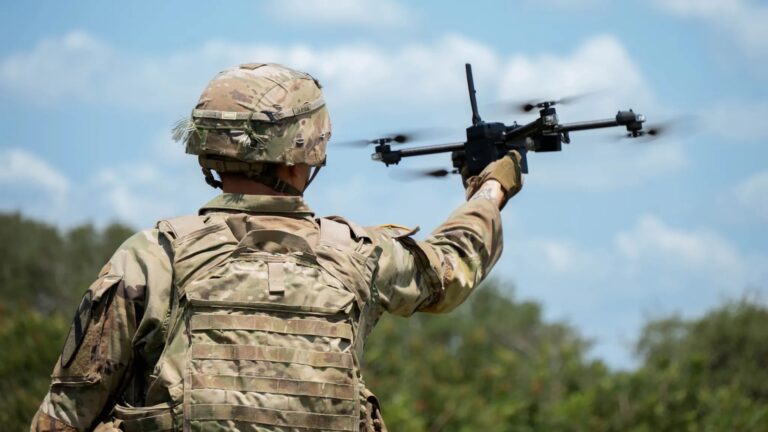
● Drones and robotic systems
● Medical kits and tourniquets
ARMA GIDEON-type product lines offer modular systems enabling forces to adapt their ballistic protection to:
CQB Operations
● Lightweight plate carriers
● High-cut helmets
● Fast-release mechanisms
● Increased agility for room-to-room engagements
Rural & Border Missions
● Heavier plates for rifle threats
● Load-bearing tactical vests
● Soft-shell and hard-shell hybrid protection
Maritime Security
● Buoyant vests
● Corrosion-resistant materials
● Quick-release maritime interfaces
Special Forces Deployments
● Multi-layered armor solutions
● Covert ballistic garments
● Mission-specific ballistic inserts
7. Operational Considerations for Defense Procurement
For B2B and B2G decision-makers, ballistic protection procurement involves more than selecting a NIJ rating. Key considerations include:
7.1 Supply-Chain Reliability
Ensuring the manufacturer can support large-scale deliveries under strict timelines.
7.2 Certification & Testing
Ballistic solutions must be:
● NIJ-certified
● Independently laboratory tested
● Field-validated under operational tempo
7.3 Lifecycle Cost Management
Factors include:
● Maintenance
● Replacement cycles
● Environmental durability
● Interoperability with existing equipment
7.4 Configuration Flexibility
Clients often require product families capable of adapting to evolving mission demands.
7.5 Training & Implementation
Proper instruction ensures optimal use and extended equipment lifespan.
8. Why Leading Defense Clients Choose ARMA GIDEON
ARMA GIDEON’s ballistic systems align with the expectations of modern defense agencies:
• Combat-Proven Design Philosophy
Every ballistic product is built from operational experience and real-world testing.
• Multi-Domain Expertise
Products integrate seamlessly with the company’s drone solutions, tactical training programs, and intelligence capabilities.
• Global Export Capability
Compliance with defense export regulations and international standards ensures smooth procurement for governments and B2B clients.
• Custom Tailoring
ARMA GIDEON supports:
● Custom sizing
● Mission-specific plate configurations
● National-spec variants
● OEM partnerships
• Turnkey Solutions
Beyond equipment, ARMA GIDEON provides:
● Tactical training
● Equipment integration
● Mission-specific consulting
● Supply-chain support
This comprehensive approach positions the company as a strategic partner rather than a simple equipment supplier.
Conclusion: Ballistic Protection as a Force Multiplier
Ballistic protection systems—Ballistic Vests (NIJ Level IIIA–IV), Ballistic Plates (Standalone & ICW), Bulletproof Helmets & Shields—have become essential components of modern defense operations. For defense ministries, law-enforcement agencies, private security forces, and multinational contractors, selecting high-quality protection is a decision that directly affects mission effectiveness and operator survivability.
ARMA GIDEON’s approach—based on innovation, military expertise, and a modular product ecosystem—delivers a holistic solution capable of meeting the requirements of today’s complex operational environments.
Ballistic protection is no longer just equipment.
It is a strategic pillar of force readiness, operational capability, and mission success.